Help Centre



For drivers under the age of 25, additional fees and/or restrictions may apply.
For information and assistance in completing your reservation, please call:
1-855-863-0357We're unable to find your location.


Executive Members receive an annual 2% Reward, up to $1,250, on qualified Costco Travel purchases

Member Exclusive: Digital Costco Shop Card with every Holland America Line sailing†

Note: Cruise itineraries are subject to change. Please verify ports and times directly with the cruise line.

New York City (officially the City of New York) is the largest city in the United States and one of the world's major global cities. Located in the state of New York, the city has a population of over 8.1 million within an area of 321 square miles (approximately 830 square km), making it the most densely populated major city in North America. Its metropolitan area has a population of 18.7 million and is one of the largest urban areas in the world. New York City is an international center for business, finance, fashion, medicine, entertainment, media, and culture, with an extraordinary collection of museums, galleries, performance venues, media outlets, international corporations, and financial markets. The city is also home to the headquarters of the United Nations, and many of the world's most famous skyscrapers. Popularly known as the "Big Apple", the "City That Never Sleeps", or the "Capital of the World", the city attracts large numbers of immigrants, as well as people from all over the United States who come for its culture, diversity, fast-paced lifestyle, cosmopolitanism, and economic opportunity. The city is also currently distinguished for having the lowest crime rate among major American cities.
Ponta Delgada, capital of the Azores, is situated on the largest island, Sao Miguel, of the Azores. It has marvelous churches, some with fabulous Baroque interiors. Also palaces from the 17th and 18th centuries. Other places worth visiting are the Lagoa do Fogo and the village of Ribeira Grande, which has important architectural features. Set within the confines of a wide inlet, Ponta Delgada is the tourist heart of São Miguel. Museums and monuments abound, and historic streets connect hotels, restaurants, and shops. A marinaharborss sailboats from Europe and America. And for those who enjoy entertainment after hours, the night brings with it a touch of animation.
Lisbon is Portugal’s hilly, coastal capital city. From the imposing São Jorge Castle, the view encompasses the old city’s pastel-colored buildings, Tagus Estuary, and Ponte 25 de Abril suspension bridge. Nearby, the National Azulejo Museum displays 5 centuries of decorative ceramic tiles. Just outside Lisbon is a string of Atlantic beaches, from Cascais to Estoril.
The capital of the region with a population of 168,000, Cartegena was founded, as its name suggests, by the Carthaginians in 227 BC and it became Hannibal’s capital city on the Iberian Peninsula. Today it is a modern, industrial city although relics of the past are still highly visible. The narrow streets of the old town were built around the ruined 13th-century cathedral. There are several sites of historical interest including the remains of the Roman road, an old Roman theatre and the Literna (an ancient lighthouse of Moorish origins). Cartagena’s ancient seaport and naval dockyard is where the first submarine was built in 1900 and where submarines are still built today. The port consists of a deep bay with a natural harbour, hence the town’s historical importance. Cartagena has a large shopping centre, plenty of supermarkets and other amenities you would expect to find in a large town including a hospital, schools and sports facilities. The town is the major service centre for the Costa Calida urbanizations that continue to develop around it.Cartegena is 30 minutes drive from Murcia via the N301San Javier airport is 15km from Cartagena.The excellent golf courses at La Manga, which has 3 18-hole courses of international standard, are 20km away.
Barcelona is a charming, cosmopolitan port on the shores of the Mediterranean Sea. This prosperous and bilingual (Spanish and Catalan) metropolis measures up to a city such as Madrid: its museums, theaters, art galleries, and nightlife area are of an impressively high standard. Besides that, this art and design center has a lot of interesting sights to offer to its visitors. The best place to watch people go by, stroll, or simply relax, is 'Las Ramblas', a pedestrian street with dozens of outdoor cafes. Here, you’ll find flower stands, book kiosks, and small market stalls where they sell birds and small animals. You’ll also find an endlessly fascinating flowing receptacle of pageant jugglers, singers, dancers, puppeteers, sidewalk artists, living statues, and assorted oddballs on parade. Nearby is 'Place Real', with plenty of bars and restaurants, and 'Palau Guell', built by the Catalan architectural genius Antoni Gaudi in his undulating art-nouveau style. After having seen these sights, stroll the narrow winding streets of the 'Barri Gotic', the medieval Gothic quarter full of interesting tapas bars, and cafes. Check out Picasso’s old hangout, 'Els Quatre Gats', which has been renovated without losing its bohemian charm. Or head for the old Barceloneta section on the waterfront. This working-class area, which was always slightly rundown and scruffy-looking, is now packed with paella restaurants. The new beach area, which runs from Barceloneta to the Olympic Village, is much cleaner than the old beach area. Although some people believe that it has been cleaned up considerably, it might be a wise idea to stay out of the water. Fortunately, the beach itself is already a feast for the eyes (and ears), with its huge and roaring waves.
Set in the heart of one of the world's most beautiful bays, Villefranche-sur-Mer sits on the steps of a natural amphitheatre - the terraced hills of the Riviera - gazing out over the sea.The plentiful sunshine of the Côte d'Azur, reflected in the enclosed bay, has given Villefranche-sur-Mer a warmth and climate all of its own and its famously rich, exotic vegetation. Long a spectator to centuries of history, Villefranche-sur-Mer has welcomed civilisations and has a rich heritage to show for it: the old city with its picturesque narrow streets, the mysterious "Rue Obscure", the Chapel Saint-Pierre, decorated by Cocteau, the fortified Port, and, last but not least, the magnificent Citadel built in 1557 by the Duke of Savoy. Today, those massive and majestic walls harbour the Town Hall, an open-air theatre surrounded by gardens, three museums and a Congress Centre.Dating from 1295, Villefranche-sur-Mer is a rich and growing city just 5 km from Nice and 13km from Monaco. But, even today, it is a city with a very special character and all the warmth and charm of a fishing village from a bygone age.
Livorno is situated along the coast of the Ligurian Sea, is one of Italy’s most important ports, both as a commercial and tourist port of call, an industrial center of national importance, and, among all of the Tuscan cities, it is generally considered the youngest, even though its territory holds historical testimonies of remote times that have survived the mass bombings of the Second War World. The city, developed at the end of the XVI century upon the request of the Medici family, is famous for being the birthplace of prestigious personalities such as Amedeo Modigliani, Pietro Mascagni, and Carlo Azeglio Ciampi. In the past, until the first years of the 20th century, it was also a tourist destination of international importance for the presence of important seaside and thermal establishments, which gave the city its name of Montecatini-on-the-sea. Livorno, which at the end of the XIX century counted around 100,000 inhabitants and was the 11th most populated city in Italy and the 2nd in Tuscany, in the last decades, has had a notable decline in the number of inhabitants and now is the 3rd most populated city in Tuscany after Florence and Prato.
Located about 80 kilometers northwest of Rome, the Port of Civitavecchia is the port of Rome and a busy ferry and cargo port serving Italy and southern Europe. Lying on Italy’s eastern shores on the Tyrrhenian Sea, the Port of Civitavecchia has excellent direct connections to Rome. It is an important cruise and ferry port with regular passage to Sardinia, Malta, Sicily, Tunis, and Barcelona. Fishing is of secondary importance to the Port of Civitavecchia. In addition to ocean-going traffic, the Port of Civitavecchia also contains a thermoelectric center and metallurgical works. In 2006, over 51 thousand people called the Port of Civitavecchia home. The Port of Civitavecchia was built on an earlier Etruscan settlement. Emperor Trajan founded the Port of Civitavecchia in the early 2nd Century, calling it Centumcellae. Today, Trajan’s Port is preserved within today’s Port of Civitavecchia. A busy growing town during the late Roman era, the Port of Civitavecchia was attacked by Vandals and then destroyed by the Saracens in 828 AD. Residents escaped to the nearby Allumiere Mountains where Pope Leo IV built a walled town in 854. Eventually, the people returned to Civitavecchia (the name means “old city”). At the end of the 15th Century, the Port of Civitavecchia was under frequent attack by pirates. The naval arsenal was constructed in 1508. Pope Paul III commissioned the building of the keep, which was designed by Donato Bramante and then finished by Michelangelo in 1537, to protect the Port of Civitavecchia from pirate attacks. In 1696, Civitavecchia became a free port under Pope Innocent XII. Because it was Rome’s main port, the French occupied the Port of Civitavecchia in 1849. The Port of Civitavecchia was linked to Rome by the Rome and Civitavecchia Rail Road in 1859. When the Port of Civitavecchia became part of the Kingdom of Italy in 1870, it was one of the Papal State’s most strongly fortified towns when Papal troops welcomed General Nino Bixio on behalf of the Italian unification forces into the Port of Civitavecchia fortress. World War II brought destruction to as much as three-quarters of the Port of Civitavecchia. Reconstruction enlarged the Port of Civitavecchia beyond its pre-war area. The Authority Portuale Civitavecchia (Port of Rome) is responsible for managing and operating the Port of Civitavecchia as well as the ports of Fiumicino and Gaeta. The modern Port of Civitavecchia is at the center of rail, road, and air networks that link it with central Italy and the world. The Port of Civitavecchia can handle about 11 million tons of cargo per year and over 1.5 million passengers. Cargoes include forest products, cereals, iron and steel, chemicals, automobiles, containers, and liquid bulk. In 2007, the Port of Civitavecchia welcomed 856 cruise vessels carrying 1.6 million passengers, and the total number of passengers using ferries and cruise vessels was 3.8 million. In 2007, the Port of Civitavecchia handled a total of 7.7 million tons of cargo. This total included 1.5 million tons of liquid bulk, 1.7 million tons of solid bulk, 4.6 million tons of packages, and 31.1 thousand TEUs of containerized cargo. The Port of Civitavecchia contains 28 berths of a total of 5.6 thousand meters in length alongside depths from 6 to 18 meters. Port properties include five warehouses containing 36 thousand square meters for handling and storing cargo. The intermodal terminal includes seven thousand square meters of storage space and 12.5 thousand square meters for loading/unloading rail cars and parking. The Port of Civitavecchia is one of the busiest ferry ports in the world. Just 80 kilometers northwest of Rome, it is the main tourist destination for people traveling to the Eternal City. It is also a central port for ferries carrying passengers to more local destinations. The ferry terminal offers a complete line of amenities. Different ferry companies offer services to various destinations. Moby Lines handles crossings to Olbia, Sardinia. Corsica Sardinia Ferries runs services to Golfo Aranci. Grimaldi Ferries carries passengers to Barcelona and Tunis, and Grand Navi Veloci operates a route to Tunis. Ferrovie dello Stato operates a combined rail-ferry service to Golfo Aranci.
Naples, a city in southern Italy, sits on the Bay of Naples. Nearby is Mount Vesuvius, the still-active volcano that destroyed the nearby Roman town of Pompeii. Dating to the 2nd millennium B.C., Naples has centuries of important art and architecture. The city's cathedral, the Duomo di San Gennaro, is filled with frescoes. Other major landmarks include the lavish Royal Palace and Castel Nuovo, a 13th-century castle.
Messina is a harbor city in northeast Sicily, separated from mainland Italy by the Strait of Messina. It’s known for the Norman Messina Cathedral, with its Gothic portal, 15th-century windows, and an astronomical clock on the bell tower. Nearby are marble fountains decorated with mythological figures, like the Fontana di Orione, with its carved inscriptions, and the Neptune Fountain, topped by a statue of the sea god.
Corfu Town (Kerkyra) is a principal port and the largest town in the Ionian islands. It is built between two Venetian castles, having its unique atmosphere. It is a thriving mass of shops and businesses, set amongst a captivating and charming assortment of elegant buildings, churches, imposing fortresses, and narrow alleyways leading to hidden squares. The tall buildings with the 'volta' (arches), the 'cantina' (narrow flagstoned streets), and the 'meralgia' (sea walls) are showing all a clear Italian influence. One of the most beautiful walks in the town is around the Esplanade (Spianada square), one of the biggest squares in Europe which is the hub of the Corfiot's life. Here you can walk around or sit in one of the many cafe bars underneath the arches of the 'Liston', a name probably derived from a similar promenade in Venice. Liston was built during the imperial French occupation and is reminiscent of the larger 'Arcades' of the Rue de Rivoli in Paris. On the upper side of the Esplanade stands a memorial to the British Lord High Commissioner Sir Thomas Maitland, built in 1816 in the shape of a circular building with Ionian columns. The Corfiots called this building 'sterna' (cistern) because this was where the entrance to the largest underground cistern of the town was to be found. Near the Maitland's monument, in front of the building where the Ionian Academy was housed, stands the statue of John Capodistrias, the first President of Greece. It is a work from the end of the 19th century showing the Governor standing deep in thought. Opposite the Liston is the Old Fortress and 'Anthonas', the Municipal Gardens. In the gardens is the statue of Lord Guilford, showing the founder of the Ionian Academy in his academic robes holding an open book. Nearby are the busts of two famous Corfiots, the poet Lorenzo Mavilis and the writer Dinos Theotokis. At the northern end of the Esplanade stands the Palace of St. Michael and St. George, one of the most elegant buildings in Corfu. Opposite the west front of the palace is a beautiful building that now houses the Reading Society of Corfu, the oldest cultural institute in modern Greece, founded in 1836. The Reading Society contains a unique library of Greek and foreign books as well as a large collection of manuscripts, newspapers, periodicals, paintings, maps and engravings mostly related to the Ionian islands. As one's gaze leaves the Esplanade, after lingering on the palace, it embraces a magnificent view towards the coastal road (Arseniou Street) with its sea walls Following along this road will take you to the Old Harbour of Corfu and the other Venetian castle, the one called the New Fortress. Along this road, the narrow lanes ('cantounia') lead to the Campielo, the oldest quarter of the town. Here the visitor can find the oldest houses and many of the historic churches in Corfu. At the northern end of Capodistria Street stands the Capodistria Mansion, an excellent example of neo-classical architecture. It was built in 1835 by the Corfiot architect John Chronis and is considered one of the most beautiful buildings in Greece. Here John Capodistrias, the first President of Greece, was born. Another notable landmark in the old town is the central market. The most interesting street here is Nickiforou Theotoki as the rows upon rows of 'volta' standing on their stone columns and the tall buildings form one of the most characteristic aspects of Corfu Town. In a little square on Nickiforou Theotoki Street stands the building of the Ionian Bank, which was built in 1846 displaying a well-proportioned facade with finely detailed Ionian pilasters and pediment. On the first floor of the building,g the Paper Money Museum is housed. At the far end of the square is the Church of St. Spyridon. It shelters the body of St. Spyridon, the patron saint of Corfu and one of the great Saints of Greek Orthodoxy, and draws a constant stream of pilgrims from all over Greece every year. On the Evgeniou Voulgareos Street stands the crenellated belfry of the Roman Catholic Church of the Annunciation a venerable building from the end of the 14th century. The whole building was destroyed in the World War II bombing, and the only remains are the belfry, two inscriptions, and a bas-relief representing war trophies. Between Evgeniou Voulgareos Street and a modern square stands the most elegant of the Venetian buildings in Corfu, the Town Hall in baroque style. At the end of Moustoxydi Street stands another building of the period of British rule, the historic Ionian Parliament. At the junction of the Garitsa coastal road and Alexandras Avenue stands the Douglas Obelisk, which also belongs to the same period, erected in honor of the Lord High Commissioner Sir Howard Douglas, to whom Corfu owes a lot of public works and philanthropic institutions.
Iraklion is the capital of Crete and of the prefecture of Iraklion. It is easily accessible from Athens by at least four flights a day. There are international flights from Iraklion to Frankfurt and Amsterdam. Between April and October, there are charters from many other European cities. Iraklion is a very busy city, especially during the tourist season, so it is advisable to book reservations for accommodation before arrival, especially during August. If you are traveling by car there are parking lots near the end of Kalokairinou Street at the Chanioporta and below the Archaeological Museum, one of the many uses of a medieval moat. Make use of them and take the opportunity to see the historical monuments. As you walk up 25 August (Odos 25 Avgoustou) Street you will see numerous agencies advertising tours of all kinds. Santorini, Rhodes, and Mikonos are some of the most visited islands. You can also arrange tours of Knossos, Festos, Gortyn, and the Samaria Gorge. Most of the offices are professional and offer good value. However, to avoid confusion and disappointment, pay attention to the details of the trip, such as the time of pick up, time of arrival at the site, time spent at the site, and entrance fees; these may sometimes be vague. The National Road is easily reached from Iraklion. You can drive to Agios Nikolaos in 1 hr (72km) and Chania in 2 hours (137km). This road is enjoyable and the scenery is spectacular. Drive with caution on all roads in Crete. All means of transportation, including donkeys, farm equipment, and tour buses use the roads at varying speeds. These facts are not truly understood by many of the tourists or even the locals. Iraklion is the fifth largest city in Greece and there has been a settlement here since Neolithic times. Although few remains have been found in the city proper, it was probably a port for Knossos during Minoan and Roman times. The Saracens captured it in 824 A.D. and renamed it El Khandak (The Moat) after the moat they dug around it. The city was regained by the Byzantine Empire in 961 A.D. after many unsuccessful attempts. After the Crusaders occupied Constantinople in 1204, they gave Crete to Boniface of Monferrat who sold the island to Venice for one thousand pieces of silver. Under Venetian rule, the arts flourished, and “Candia”, as the Venetians renamed it, became a center of learning. Many scholars and artists took refuge in Candia after the fall of Constantinople in 1453. The Venetians began construction of the city walls in 1462, which were completed more than a century later. The walls were 4km in length, of a triangular shape, and had seven bastions. The Venetians also built the harbor and various other masterly architectural works. The walls proved their deterrent strength when the city was besieged for 21 years, one of the longest sieges in history. The final surrender came in 1669 after 100,000 Turks and 30,000 Venetians had been killed. Turkish occupation was heavily resented by the Cretans and continuous guerrilla warfare was waged against the Turks and, in return, the Turks often made reprisals against the Cretan population in the cities. Iraklion grew in size after the 1913 union with Greece. However, its strategic location again made it a target for invading forces in 1941. The German bombardment during the Battle of Crete caused a great amount of damage and after the war, the city was extensively rebuilt. Chania was originally the capital of Crete. The administrative center of Crete was transferred to Iraklion in 1971.
The city of Rhodes is situated in the northern part of the island and has a population of 40,000 inhabitants. The town is characterized by modern blocks of flats, wide streets, stores, squares, monuments, picturesque neighborhoods, neo-classical houses, Byzantine churches, and Turkishmosquese. The recent tourist growth contributed to the construction of modern hotel units, nightclubs, tavernas, restaurants, and numerous shops. The sites of Rhodes are varied and interesting. Among them, one should visit the ruins of the Ancient City on the hill of Monte Smith, the mosque of Myrat Reis, the mosque of Souleiman, the Hydrobiological Institute, the churches of Agios Fragiskos, Panagia Nikis, True Cross, Panagia Kastrou, Profitis Ilias and Evangelista, with the beautiful frescoes created by Kondoglou. One should also visit the windmills, the tower of Agios Nikolaos at the port of Mandraki, as well as the green park of Rodini, a few kilometers outside the city. The most impressive part of the city is the Medieval Town, the dominating walls surrounding it, and the Palace of the Grand Magistrates, signifying the city's glorious and glamorous past. One should also visit the museums of Rhodes which are of extreme interest. The Archaeological Museum, housed in the Hospital of the Knights, includes sculptures, pots, and several remarkable findings, while the Folk Museum exhibits a collection of traditional costumes and objects of daily use.
The history of Bodrum, known as Halicarnassus or Halicarnassos goes back to the 13th century BC. Excavations reveal the 5000-year-old history of this town. Many civilizations found their home here. Carians for example, Homer tells in his Ilia, that the Carians helped to defend Troya. Herodotus, known as the father of history, was born in Bodrum in 484 BC- and he said that Bodrum had been founded by the Dorians. The next settlers were the Carians and Lelegians. In the 6th. Century BC, the region came under Persian rule. Its most brilliant period was around 353. BC. when it was the capital of the Satrap of Caria (In this century it was famous for its trade, sailing, and boatbuilding.) Artemisia who was a warrior-woman played a significant role in the protection of the Asian Union and she achieved fame by adopting a stance against Rhodes as the Admiral of the Carianfleet in 480 BC. The Mausoleum is Bodrums oldest antiquity and was built by Artemisia II in honor of her husband King Mausolos. It became one of the wonders of the ancient world, Mausoleum still is the general term for a large tomb. The entire structure stood at over 50 meters in height. The first reliefs from the Mausoleum reached the British Museum in London in 1846, these included frescos and other objects.
This seaside resort town has grown immensely in the last 30 years and is especially popular with package holiday-makers from Europe. From a population of 6000 in the 1970s, it is now closer to 50,000, although a high proportion of this is part of the tourist industry and here only for the summer. Many cruising ships traveling around the Aegean Islands stop here, especially because of its proximity (20km) to Selcuk. Kusadasi is a good base to explore this and other ancient cities like Priene and Didyma. Although there is little historical interest in Kusadasi itself, the town is popular predominantly because of its many hotels, restaurants, souvenir and carpet shops, and lively nightlife. The Kale district has some old traditional houses and narrow streets which gives some indication of what the town used to be like. The most famous beach is Kadinlar Plaji, 2.5km south of the town, dominated by huge hotels, and can get very crowded in summer. There are several small beaches further south, and closer to town is Yilanci Burnu, the peninsular.
Istanbul is an international art and cultural center. The International Arts and Cultural Festival is held each year in June and July with famous artists coming from all over the world. These performances are held mostly at the Ataturk Cultural Center. Those who enjoy classical music can hear it at the Cemal Resit Rey Hall. Operas, operettas, ballets, films, concerts, exhibitions, and conferences all contribute to the cultural palette of the city. Istanbul also has a rich program of light entertainment. Nightclubs provide splendid entertainment throughout dinner, ranging from a selection of Turkish songs to belly dancing. Istanbul is a preferred city in terms of international art activities. This is because the art lovers of Istanbul are respectful of the art and the artist. The famous performance artists feel very comfortable in Istanbul concerts. Because the audience is very well aware of "the ritual of watching an artistic performance." The artist knows that he or she will not come across with impudent or disrespectful behaviors. It is the same for international picture galleries, biennials, and visual activities. Neither the spectator nor the critic leaves their "respectful attitude against the artist. " Hence the myths of traditional pop-rock genres, giants of jazz, and contemporary legends of classical Western music are always in Istanbul, on the stage. To sum up; Istanbul is a city that can add compassion next to its giant size in terms of living area and population, and try to assimilate the universal culture while "welcoming" it with utmost hospitality: a "world city" In this case, it deserves to be called "universal culture capital"
Istanbul is an international art and cultural center. The International Arts and Cultural Festival is held each year in June and July with famous artists coming from all over the world. These performances are held mostly at the Ataturk Cultural Center. Those who enjoy classical music can hear it at the Cemal Resit Rey Hall. Operas, operettas, ballets, films, concerts, exhibitions, and conferences all contribute to the cultural palette of the city. Istanbul also has a rich program of light entertainment. Nightclubs provide splendid entertainment throughout dinner, ranging from a selection of Turkish songs to belly dancing. Istanbul is a preferred city in terms of international art activities. This is because the art lovers of Istanbul are respectful of the art and the artist. The famous performance artists feel very comfortable in Istanbul concerts. Because the audience is very well aware of "the ritual of watching an artistic performance." The artist knows that he or she will not come across with impudent or disrespectful behaviors. It is the same for international picture galleries, biennials, and visual activities. Neither the spectator nor the critic leaves their "respectful attitude against the artist. " Hence the myths of traditional pop-rock genres, giants of jazz, and contemporary legends of classical Western music are always in Istanbul, on the stage. To sum up; Istanbul is a city that can add compassion next to its giant size in terms of living area and population, and try to assimilate the universal culture while "welcoming" it with utmost hospitality: a "world city" In this case, it deserves to be called "universal culture capital"
Today Piraeus is the home base of Greek shipping, the largest commercial fleet in the world, apace bound to the sea like few others. The harbors of Zea and Mikrolimano as well as Phaliro play host to countless yachts and sailing craft throughout the year. Piraeus was known in medieval times as Porto Leone, a name due to the enormous stone lion, which guarded the port's entrance. Today, the life of Piraeus is centered on its three ports: the main, central one, and those of Zea and Mikrolimano. You can walk around the central harbor, shared by cargo and passenger ships alike, and watch the constant comings and goings of goods and people from around the world. Having completed your tour of the central harbor of Piraeus you will then head south traversing the peninsula and arriving at Peiraiki, one of the most picturesque neighborhoods in the city. Here one finds the harbor of Zea, one of the largest marinas in the Mediterranean. If the night finds you in the area, you can try one of the many bars found nearby. You can continue your tour along the waterfront heading towards Kastella but a small deviation toward the city center will be useful for then you can visit the verdant square of the municipal Theatre with cafeterias and shops of all kinds surrounding it. The magnificent building housing the Municipal Theatre as well as the Town Hall and the Library complete the picture presented by the main square in the city. Piraeus's little natural harbors are among its busiest and most touristy areas: Mikrolimano, Passalimani, Zea, Freatida, and Hatzikiriakio. Countless seaside tavernas provide delicious seafood washed down with the uniquely Greek drink, ouzo. The fresh smell of the sea and the sounds made by the assortment of caiques, yachts, and sailing ships, which are moored next to the tables, complete the enjoyment of the food Beyond the port, the most impressive spots are the hills of Profitis Ilias and Kastela with their neoclassical mansions and modern buildings which look as they are hanging over the sea.
If you've ever wondered what sort of prize you'd get for saving Europe, look no further than Valletta. Named after La Valette, the Grandmaster who masterminded Malta's successful stand against the Turkish siege of 1565, Valletta became the city of the Knights of the Order of St John and the seat of Malta's government. While traveling through the Mediterranean, Sir Walter Scott described Valletta as 'the city built by gentlemen for gentlemen'. Today it's a beautifully preserved 16th-century walled city, small enough to cover in a few hours without sweating too much in the Mediterranean sun. The streets were carefully laid out to channel cool breezes in from the harbour. Situated on the northeast coast of Malta, Valletta is the capital and is built on the promontory of Mount Sciberras which juts out into the middle of a bay. This dissects the bay into two deep harbors: the Grand Harbour to the east and the Marsamxett to the west. Valletta is a rough rectangle at the tip of a peninsula on the coast, just a few hundred meters across in either direction, and thus surrounded by water on its northern, eastern, and southern sides. The city was named after Jean Parisot de la Valette who was the Grand Master of the Order of the Knight Hospitallers (Knights of Saint John of Jerusalem). This famed religious order of hospitallers was founded in Jerusalem in the 11th century and made their base in Malta after they were expelled from Rhodes by the Ottoman Turks. During the time of Grand Master La Valette, in 1565, the Knights and the Maltese managed to suppress a siege on the island by the forces of Süleyman the Magnificent, Sultan of the Ottoman Empire in what was to become known as one of history's greatest sieges. Following the siege, the building of the city began in the same year 1565 to create a base for the defense of the island. Although Grand Master La Valette managed to lay the first stone, he died before its completion. Most of the embellishments of Valletta were done during the time of Grand Master La Cassiere, especially the magnificent St John's Co-Cathedral. The reign of the Knights of St John eventually came to an end with the successful invasion by Napoleon who occupied Malta on his way to Egypt. A Maltese revolt against the French garrison was the catalyst for the occupation of Valletta by the British in 1800. Valetta is also the spot where the Italian fleet surrendered to the Allies in 1943. Valletta's network of streets is laid out in an orthogonal grid dominated by a main artery that crosses the length of the entire city and opens up into a series of squares at its geometric center, around the Palace of the Grand Masters. The city architecture is inspired by Italian Renaissance planning principles and served as an early model of urban design. Valletta is one of the most important planned towns of the Renaissance. It equals in its noble architecture, any capital in Europe, while its timeless beauty and artistic treasures make it a well-deserved World Heritage site. There are several superb museums here as well as historical sites that are worth visiting. The main thoroughfare in the city is Republic Street. You'll find all the main shops and character-filled side streets leading off from here. For those interested in shopping, Merchant's Street and Lucia Street are the places to go for the most interesting merchandise. Lucia Street is famous for the exquisite silver and gold filigree jewelry sold there. Merchant Street specializes in souvenirs and is also home to a large open market.
La Goulette is the port of Tunis, the capital of Tunisia. The Kasbah fortress was built in 1535 by Charles I of Spain but was captured by the Ottoman Turks in 1574.
Málaga is a port city on southern Spain’s Costa del Sol, known for its high-rise hotels and resorts jutting up from yellow-sand beaches. Looming over that modern skyline are the city’s 2 massive hilltop citadels, the Alcazaba and ruined Gibralfaro, remnants of Moorish rule. The city's soaring Renaissance cathedral is nicknamed La Manquita ("one-armed lady") because one of its towers was curiously left unbuilt.
The city of Cadiz, which practically accounts for the whole of the municipal area, lies to the east of the bay of the same name, in an area that could be described as a half island, half peninsula, connected to the mainland by a slender, sandy strip. Its situation is responsible for its obvious maritime tendencies, and it has been dedicated to seafaring pursuits since its foundation. The Phoenicians, Greeks, Romans, and Arabs all passed through what is believed to be the world’s oldest city, and it was here that Spain’s first democratic Constitution was drawn up. Despite its essentially urban nature, it also boasts areas of natural interest, such as the beaches of La Cortadura and El Chato, as well as Santibanez Mud Flats, which are part of Cadiz Bay Natural Park. The city, popularly known as “La Tacita de Plata” (The Silver Cup), has an unmistakable marine flavor, and its people are famous for their good humor and hospitality, as witnessed by the famous carnival; it boasts monuments of great interest, such as the Cathedral, the city walls, Holy Cross Parish Church, the Genoese Park, Puerta de la Caleta, etc. All places of indubitable charm, to which we must add the city’s cuisine and beaches, famous for their beauty, such as La Caleta, Santa Maria del Mar, and La Victoria. History This legendary city was founded by the Phoenicians in 1100, although the oldest archaeological remains date back to around 800 B.C. Mythology links its foundation with Hercules and the legendary Tartessia. The Phoenicians called the city Gadir, meaning “closed area”. They built a commercial factory and a temple in honor of the god Melkart. In 206 B.C. it was joined with Rome as an allied city under the name Gades. This was the start of one of the most prosperous periods in Cadiz’s history, and it became one of the most important cities in the Roman Empire. In the Imperial age, it was known as “Augusta Urbs Julia Gaditana”. Its inhabitants were soon granted Roman citizenship. When the Moslem invasions began in the 8th century, it provided the armies with significant support by facilitating their passage, though it soon suffered a decline in importance which would prevail until the Christian conquest and re-settlement at the hands of Alfonso X, known as The Wise, between 1260 and 1262. During the 15th century, the city’s economic activity was based essentially on sea commerce, particularly in North Africa. In 1493, the Catholic Monarchs made Cadiz Crown property; it had belonged to the Ponce de Leon estate since 1470. With the discovery of America, Cadiz’s rise to greatness began, culminating in the 18th century. Its natural conditions meant that whenever ships couldn't berth in Seville, they could do so in Cadiz. In 1717, Seville’s Contracting House was moved to Cadiz, the monopoly of American trade traveling with it; however, this situation was short-lived, as the concession to trade with the New World was extended to twelve ports in 1778. The town center was consolidated in the 18th and 19th centuries when urban renovation was carried out and most of the monuments and buildings that we know today were built. La Isla del Leon, now San Fernando, was the setting for the earliest meetings of the famous Cadiz Cortes, general constituent assemblies set up to provide Spain with a Constitution during the War of Independence. Fleeing from the French, the Government took refuge near Cadiz, the only stronghold that the French were unable to capture during the whole of the war. Between 1810 and 1811, Government assemblies took place in La Isla de Leon Theatre; in February 1811, the proximity of Napoleon’s troops forced them to move to San Felipe de Neri Church in Cadiz, returning once more to La Isla de Leon before finally making their definitive journey back to Madrid in 1813. After the war, the city continued at the vanguard of liberalism, with its support for Riego in 1820 and its leading role in the face of the French invasion in 1823. In a similar vein, Cadiz was at the forefront of the 1868 uprising. At the end of the 19th century, the city’s economic decline began. A series of events including the loss of the colonial market, culminating in the 1898 Disaster, and the African War, among others, ushered in a crisis that was to have grave consequences.
The Funchal city is the capital and owes its name to the plant called "lunch". This plant existed in abundance in this area. Sweets are still made from this plant today. The category of the city was granted by King Manuel I, on 21 August 1508. It's a city of white rows of houses that climb up the hills, like an amphitheater around a beautiful bay of blue sea. This architectonic distribution, due to the region's rugged and high terrain, covers itself with special beauty to bring in the New Year, since it makes it possible to put on a fireworks display of rare beauty and present a unique festive illumination for the season. Funchal's port is the entry door for many cruise ships as well as for the loading and unloading of goods shipped by sea. The city is divided into three principal areas: on the west side, we have the tourist area where we find most of the hotels; on the east side, the so-called "Zona Velha" or "Cidade Velha" (Old Zone or Old Town), where old constructions predominate, some of them having been transformed into typical restaurants; and the central part, where a great part of the commerce and characteristic monuments are found.
New York City (officially the City of New York) is the largest city in the United States and one of the world's major global cities. Located in the state of New York, the city has a population of over 8.1 million within an area of 321 square miles (approximately 830 square km), making it the most densely populated major city in North America. Its metropolitan area has a population of 18.7 million and is one of the largest urban areas in the world. New York City is an international center for business, finance, fashion, medicine, entertainment, media, and culture, with an extraordinary collection of museums, galleries, performance venues, media outlets, international corporations, and financial markets. The city is also home to the headquarters of the United Nations, and many of the world's most famous skyscrapers. Popularly known as the "Big Apple", the "City That Never Sleeps", or the "Capital of the World", the city attracts large numbers of immigrants, as well as people from all over the United States who come for its culture, diversity, fast-paced lifestyle, cosmopolitanism, and economic opportunity. The city is also currently distinguished for having the lowest crime rate among major American cities.
Costco Member Reviews
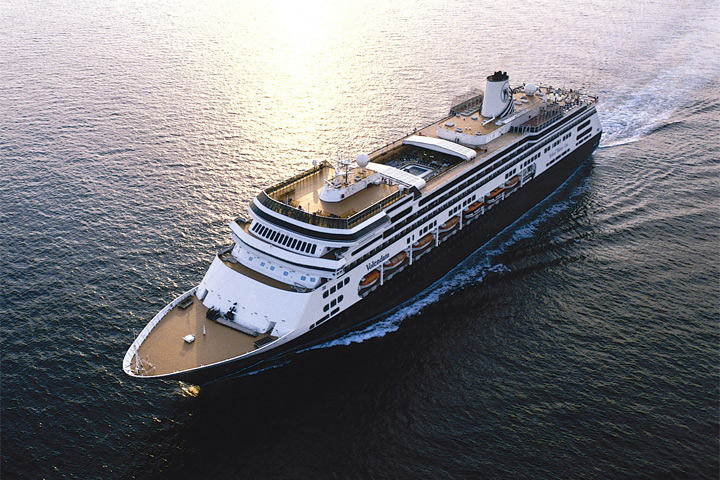
The beautiful garden theme of Volendam is reflected in an artful floral motif throughout the ship's spacious public rooms and elegant staterooms. Flowers are found in abundance in floral fabrics and tapestries, as well as huge vases of fresh floral arrangements. Guests aboard Volendam enjoy wide teak decks, elegant dining rooms and spacious staterooms — many with private verandahs.
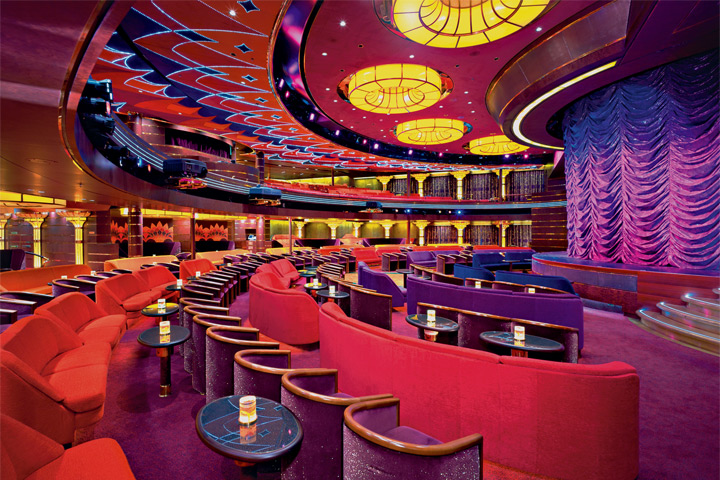
Show Lounge
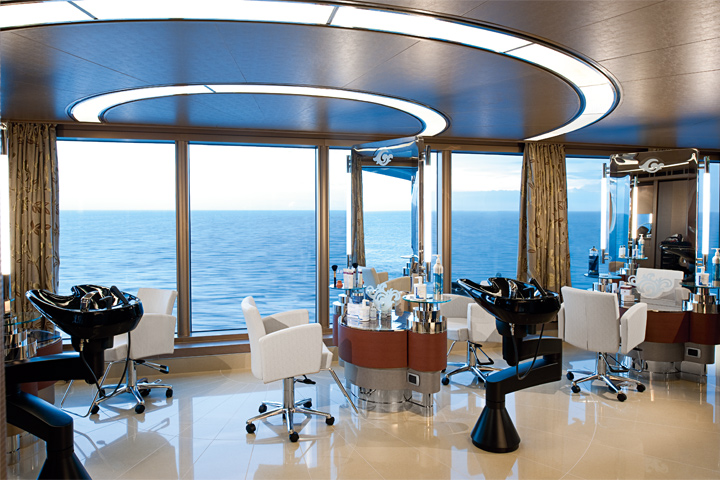
Greenhouse Salon
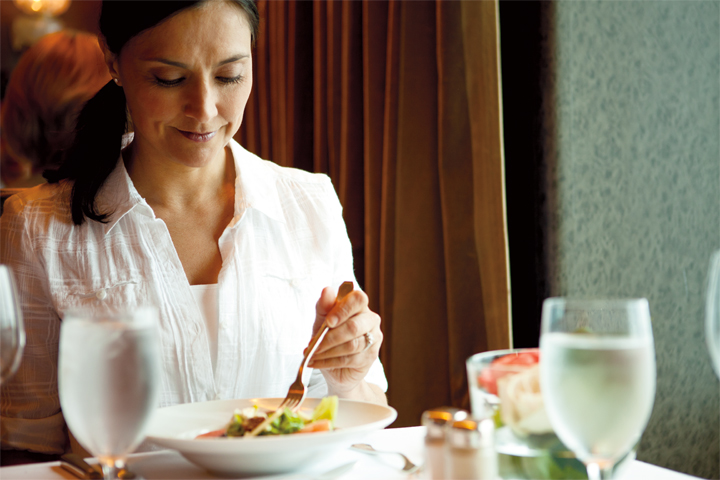
Dining Room
The Dining Room: For breakfast, lunch or an unforgettable five-course dinner, the elegant main dining room is your destination for sophisticated dining, with menu selections from classic favorites to vegetarian options, to dishes inspired by the regions you’ll visit. Menus by Holland America Line's Culinary Council® of world-renowned chefs.
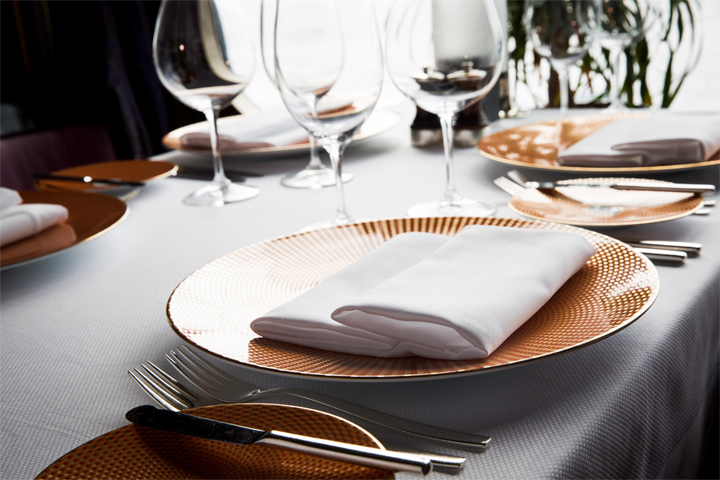
Pinnacle Grill
Pinnacle Grill: Enjoy dishes inspired by America’s Pacific Northwest, such as king salmon from Alaska and choice, responsibly raised beef from Washington State’s Double R Ranch. Complement your meal with a selection of boutique wines from the Pacific Northwest and other celebrated vineyards from around the world. This restaurant is available for an additional cost.
Canaletto: This authentic Italian restaurant offers a menu that celebrates spartire (Italian for "sharing"). Try braised chicken cacciatore "al forno," branzino ai ferri or a classic Italian pasta: spaghetti pomodoro or garlic shrimp-infused ravioli, perhaps. Buon appetito! This restaurant is available for an additional cost.
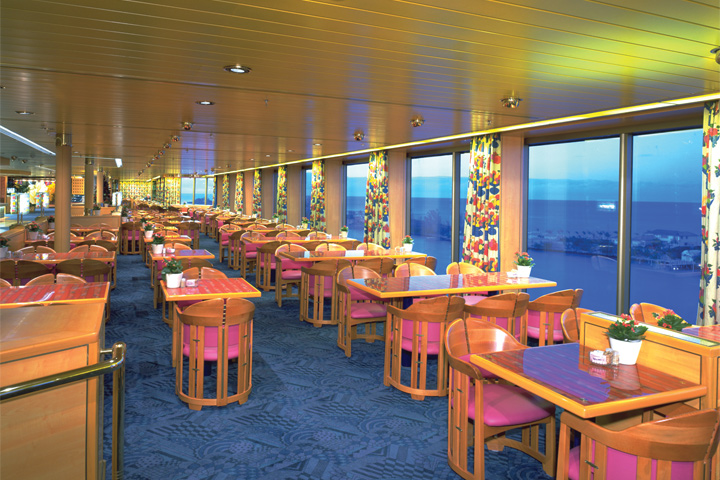
Lido Market
Lido Market: Lido Market provides a fresh, new approach to casual dining for breakfast, lunch or dinner, with a panoramic view of the sea. A modern marketplace with different themed stations, the Lido offers a curated selection of delicious options to grab on the go or to have quickly made to order.
Dive-In: Dive in to a grilled burger on brioche or a Nathan’s Famous gourmet hot dog. For alfresco dining by the pool, Dive-In has it all, including lighter fare like the grilled chicken breast sandwich and vegetarian-friendly portabella mushroom stack.
Explorations Café: A comfortable, coffeehouse environment offering espresso drinks and pastries. This restaurant is available for an additional cost.
Room Service: Complimentary 24-hour dining in the comfort of your stateroom.
Staterooms feature premium massage showerheads, fine linens and fresh fruit upon request.

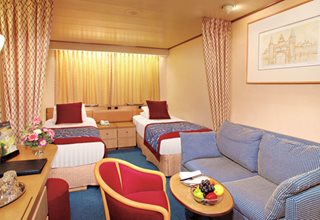
Category: I
These comfortable 143–225 sq.ft staterooms feature premium showerheads, ample storage space, two beds that convert to one queen-size bed — our signature Mariner's Dream™ bed with plush euro-top mattress, and a host of additional amenities.
Category: MM
These comfortable 143–225 sq.ft staterooms feature premium showerheads, ample storage space, two beds that convert to one queen-size bed — our signature Mariner's Dream™ bed with plush euro-top mattress, and a host of additional amenities.
Category: J
These comfortable 143–225 sq.ft staterooms feature premium showerheads, ample storage space, two beds that convert to one queen-size bed — our signature Mariner's Dream™ bed with plush euro-top mattress, and a host of additional amenities.
Category: K
These comfortable 143–225 sq.ft staterooms feature premium showerheads, ample storage space, two beds that convert to one queen-size bed — our signature Mariner's Dream™ bed with plush euro-top mattress, and a host of additional amenities.
Category: L
These comfortable 143–225 sq.ft staterooms feature premium showerheads, ample storage space, two beds that convert to one queen-size bed — our signature Mariner's Dream™ bed with plush euro-top mattress, and a host of additional amenities.
Category: M
These comfortable 143–225 sq.ft staterooms feature premium showerheads, ample storage space, two beds that convert to one queen-size bed — our signature Mariner's Dream™ bed with plush euro-top mattress, and a host of additional amenities.
Category: N
These comfortable 143–225 sq.ft staterooms feature premium showerheads, ample storage space, two beds that convert to one queen-size bed — our signature Mariner's Dream™ bed with plush euro-top mattress, and a host of additional amenities.
Elegant staterooms feature luxurious bedding, premium massage showerheads, a porthole or a window and fresh fruit upon request.
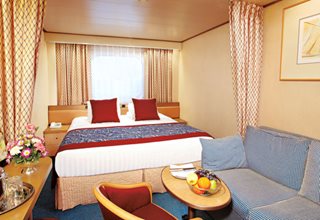
Category: D
With a view of the ocean through a window or porthole, these expansive staterooms include a sitting area, two beds that convert to one queen-size bed — our signature Mariner's Dream™ bed with plush euro-top mattress — premium massage showerheads, and a host of amenities.
Category: DA
With a view of the ocean through a window or porthole, these expansive staterooms include a sitting area, two beds that convert to one queen-size bed — our signature Mariner's Dream™ bed with plush euro-top mattress — premium massage showerheads, and a host of amenities.
Category: E
With a view of the ocean through a window or porthole, these expansive staterooms include a sitting area, two beds that convert to one queen-size bed — our signature Mariner's Dream™ bed with plush euro-top mattress — premium massage showerheads, and a host of amenities.
Category: F
With a view of the ocean through a window or porthole, these expansive staterooms include a sitting area, two beds that convert to one queen-size bed — our signature Mariner's Dream™ bed with plush euro-top mattress — premium massage showerheads, and a host of amenities.
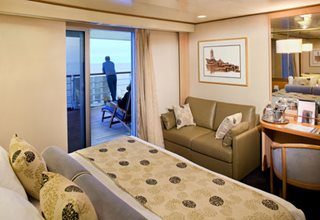
Category: CA
Available exclusively on Volendam, Lanai staterooms feature sliding glass doors opening directly onto the Promenade Deck, with reserved loungers for ocean views — perfect for easy outdoor access and relaxed sea days.
Category: G
With a view of the ocean through a window or porthole, these expansive staterooms include a sitting area, two beds that convert to one queen-size bed — our signature Mariner's Dream™ bed with plush euro-top mattress — premium massage showerheads, and a host of amenities.
Category: H
With a view of the ocean through a window or porthole, these expansive staterooms include a sitting area, two beds that convert to one queen-size bed — our signature Mariner's Dream™ bed with plush euro-top mattress — premium massage showerheads, and a host of amenities.
Category: DD
With a view of the ocean through a window or porthole, these expansive staterooms include a sitting area, two beds that convert to one queen-size bed — our signature Mariner's Dream™ bed with plush euro-top mattress — premium massage showerheads, and a host of amenities.
Category: EE
With a view of the ocean through a window or porthole, these expansive staterooms include a sitting area, two beds that convert to one queen-size bed — our signature Mariner's Dream™ bed with plush euro-top mattress — premium massage showerheads, and a host of amenities.
Category: FF
With a view of the ocean through a window or porthole, these expansive staterooms include a sitting area, two beds that convert to one queen-size bed — our signature Mariner's Dream™ bed with plush euro-top mattress — premium massage showerheads, and a host of amenities.
Category: HH
With a view of the ocean through a window or porthole, these expansive staterooms include a sitting area, two beds that convert to one queen-size bed — our signature Mariner's Dream™ bed with plush euro-top mattress — premium massage showerheads, and a host of amenities.
Category: C
With a view of the ocean through a window or porthole, these expansive staterooms include a sitting area, two beds that convert to one queen-size bed — our signature Mariner's Dream™ bed with plush euro-top mattress — premium massage showerheads, and a host of amenities.
Spacious staterooms have a private balcony, whirlpool bath (some with shower only) and more.
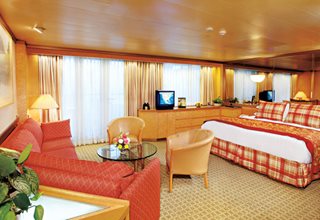
Category: SB
Featuring floor-to-ceiling glass doors, spacious private verandahs, expansive sitting areas, and comfortable sleeping accommodations with Mariner's Dream™ beds, our 465–502 sq.ft suite sleeps up to four guests and boasts a Whirlpool bath and an independent, full-size shower stall, vanity, premium bathrobes, pillow menus, fresh flowers, and binoculars.
Category: SA
Featuring floor-to-ceiling glass doors, spacious private verandahs, expansive sitting areas, and comfortable sleeping accommodations with Mariner's Dream™ beds, our 465–502 sq.ft suite sleeps up to four guests and boasts a Whirlpool bath and an independent, full-size shower stall, vanity, premium bathrobes, pillow menus, fresh flowers, and binoculars.
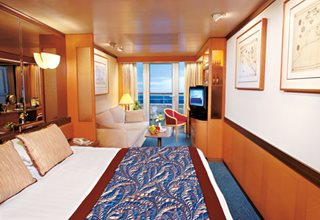
Category: BC
Graced with a private verandah, floor-to-ceiling glass doors, and comfortable sitting areas, our 260–356 sq.ft Vista Suites are filled with natural light. They include two beds that convert to one queen-size bed — our signature Mariner's Dream™ bed with plush euro-top mattress. Bathrooms vary by suite.
Category: AA
Graced with a private verandah, floor-to-ceiling glass doors, and comfortable sitting areas, our 260–356 sq.ft Vista Suites are filled with natural light. They include two beds that convert to one queen-size bed — our signature Mariner's Dream™ bed with plush euro-top mattress. Bathrooms vary by suite.
Category: BB
Graced with a private verandah, floor-to-ceiling glass doors, and comfortable sitting areas, our 260–356 sq.ft Vista Suites are filled with natural light. They include two beds that convert to one queen-size bed — our signature Mariner's Dream™ bed with plush euro-top mattress. Bathrooms vary by suite.
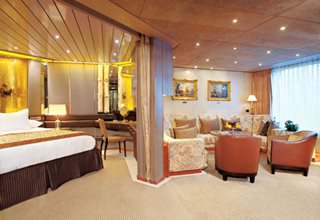
Category: PS
Our premier 1,290 sq.ft Pinnacle Suite features floor-to-ceiling glass doors, a large, private verandah, living, dining, and dressing rooms, and lush sleeping accommodations with luxurious Duxiana® king beds. These elegant suites sleep up to four guests and include an oversized Whirlpool bath and an independent, full-size shower stall, vanity, and guest toilets.
Category: A
Graced with a private verandah, floor-to-ceiling glass doors, and comfortable sitting areas, our 260–356 sq.ft Vista Suites are filled with natural light. They include two beds that convert to one queen-size bed — our signature Mariner's Dream™ bed with plush euro-top mattress. Bathrooms vary by suite.
Category: B
Graced with a private verandah, floor-to-ceiling glass doors, and comfortable sitting areas, our 260–356 sq.ft Vista Suites are filled with natural light. They include two beds that convert to one queen-size bed — our signature Mariner's Dream™ bed with plush euro-top mattress. Bathrooms vary by suite.

| Symbol | Description |
|---|---|
 | Fully obstructed view |
 | Bathtub & shower |
 | Staterooms EE3396, EE3391, HH3431, HH3430, E2702, L2700, J2555, J2554, G2500, FF1964, FF1955, G1807, and G1806 are ambulatory accessible, roll-in shower only |
 | Suite SA7034 is fully accessible with single side approach to the bed, bathtub, and roll-in shower; Staterooms DA6104, G1805, and G1804 are fully accessible with single side approach to the bed, roll-in shower only |
 | Quad (2 lower beds, 1 sofa bed, 1 upper) |
 | 2 lower beds convert to 1 queen-size bed (no sofa bed) |
 | Suites B7088, B7087, B6228, and B6225 and stateroom EE3429 are fully accessible, roll-in shower only |
 | Triple (2 lower beds, 1 sofa bed) |
 | Partial sea view |
 | 2 lower beds not convertible to a queen-size bed |
 | These staterooms have portholes instead of windows |
 | Shower only |
*Price shown is per person based on double occupancy and is valid for select stateroom categories only. Click on the Terms & Conditions link below for details.
†One Digital Costco Shop Card per room/stateroom, per stay. The exact amount of the Digital Costco Shop Card will be calculated during the booking process. The Digital Costco Shop Card promotion is nontransferable and may not be combined with any other promotion. A Digital Costco Shop Card will be emailed 1 to 4 weeks after your trip. Digital Costco Shop Cards are not redeemable for cash, except as required by law. Click on the Terms & Conditions link below for additional information.
Ship's registry: The Netherlands
Package ID: HALVOLEUR20261008
Book this cruise with Costco Travel and receive a Digital Costco Shop Card. The Digital Costco Shop Card is a convenient payment option in our warehouses and on Costco.ca.

We are processing your payment.
Do not refresh your browser or exit this page.


|
No Image Available |
 United States
 Australia