

 Help Centre

 United States
 Canada
 Australia
Coupon Override
Please Call
For drivers under the age of 25, additional fees and/or restrictions may apply.
For information and assistance in completing your reservation, please call:
1-855-863-0357Sorry
We're unable to find your location.

Asia Africa and Middle East: Japan Fall Foliage, Shanghai Nights & Seoul Sunsets

All-Inclusive Cruise

All onboard gratuities
Select complimentary shore excursions**
Unlimited beverages, including fine wines and premium spirits served throughout the ship
Complimentary dining venues
Complimentary in-suite bar
Complimentary caviar
Complimentary Wi-Fi packages with unlimited minutes
Welcome bottle of Champagne

Executive Member Benefit
Executive Members receive an annual 2% Reward, up to $1,250, on qualified Costco Travel purchases

Digital Costco Shop Card
Member Exclusive: Digital Costco Shop Card with every Seabourn® sailing†
Sailing Itinerary

Note: Cruise itineraries are subject to change. Please verify ports and times directly with the cruise line.

Overview


Describing Tokyo to someone who has never been here is a formidable task. After all, how do you describe a city that--as one of my friends visiting Tokyo for the first time put it--seems like it's part of another planet? To be sure, Tokyo is very different from Western capitals, but what sets it apart is its people. Approximately 12 million people reside within Tokyo's 1,200,000,000 sq. km (800 sq. miles), and almost one-fourth of Japan's total population lives within commuting distance of the city. This translates into a crush of humanity that packs the subways, crowds the sidewalks, and fills the department stores beyond belief. In some parts of the city, the streets are as crowded at 3 am as they are at 3 pm. With its high-energy, visual overload, Tokyo makes even New York seem like a sleepy, laid-back town. And yet, despite its limited space for harmonious living, Tokyo remains one of the safest cities in the world, with remarkably little crime or violence. No matter how lost I may become, I know that people will go out of their way to help me. Hardworking, honest, and helpful to strangers, the Japanese are their country's greatest asset. With Tokyo so densely packed, it comes as no shock to learn that land here is more valuable than gold and that buildings are built practically on top of each other, shaped like pieces in a jigsaw puzzle to fit the existing plots of real estate. More than perhaps any other city in the world, Japan's capital is a concrete jungle, with a few parks but not many trees to break the monotony, and it stretches on and on as far as the eye can see. Fires, earthquakes, wars, the zeal for modernization, and the price of land have taken their toll on the city, eradicating almost all evidence of previous centuries. It's as though Tokyo was born only this morning, with all the messy aftermath of a city conceived without t plan and interested only in the future. Thus, first-time visitors to Tokyo are almost invariably disappointed. They come expecting an exotic Asian city, but instead find a megalopolis Westernized to the point of drabness. Used to the grand edifices and monuments of Western cities, they look in vain for Tokyo's monuments to its past--ancient temples, exquisite gardens, imperial palaces, or whatever else they've imagined. Instead, they find what may be, quite arguably, one of the ugliest cities in the world. So, while Tokyo is one of my favorite cities, it's an appreciation that came only with time. When I first moved here, I was tormented by the unsettling feeling that I was somehow missing out on the "real" Tokyo. Even though I was living and working here, Tokyo seemed beyond my grasp, elusive, vague, and undefined. I felt that the meaning of the city was out there somewhere if only I knew where to look. With time, I finally learned that I needn't look farther than my front window. Tokyo has no center but rather is made up of a series of small towns and neighborhoods clustered together, each with its history, flavor, and atmosphere. There are narrow residential streets, ma-and-pa shops, fruit stands, and stores. There's the neighborhood tofu factory, the lunch-box stand, the grocery shop, and the tiny police station, where the cops know the residents by name and patrol the area by bicycle. There are carefully pruned bonsai trees gracing sidewalks, women in kimonos bowing and shuffling down streets, and wooden homes on impossibly narrow streets. Walk in the old downtown neighborhoods of Asakusa or Yanaka and you're worlds apart from the trendy quarters of Harajuku or the high-rises of Shinjuku. Neighborhoods like these make Tokyo lovable and livable. What's more, once visitors get to know Tokyo better, they learn that you can't judge Tokyo by what it looks like on the outside, for this is a city of interiors. Even those concrete monsters may house interiors that are fascinating in design and innovation. In the basement of that drab building could well be a restaurant with wooden beams, mud walls, and thatched ceiling, imported intact from a farmhouse in the Japan Alps; on its roof could be a small Shinto shrine, while the top floor could house a high-tech bar or a sophisticated French restaurant. And beneath Tokyo's concrete shell is a thriving cultural life left very much intact. If,f you're interested in Japan's performing arts as well as such diverse activities as the tea ceremony or sumo, Tokyo is your best bet for offering the most at any one time. Tokyo is also rich in museums and claims the largest repository of Japanese art in the world. It also gets my vote as the pop-art capital of the world; if you're into kitsch, you'll be in high heaven. I can't imagine being bored here, even for just a minute.
Overview

Blessed with a mild climate throughout the year, Shimizu is known for producing mandarin oranges, tea, and strawberries. On the coast, there is a pine-tree grove on a sand spit called Miho no Matsubara which is often mentioned in legends. From the small mountain called Nihondaira tourists can enjoy a superb view of Mt. Fuji and the light-filled city at night. Picking strawberries during the winter and spring months is a popular pastime.
Overview

Kagoshima is a bright sunny tropical city. Tourists can see smoke coming from the magnificent Mt. Sakurajima across Kinko Bay. The city has been known as the Naples of the Orient for many years. It prospered as a castle town of the powerful Lord Shimazu, who had 770 thousand "koku" of rice during the Edo Period. The city still maintains the strong spirit of Takamori Saigo and Toshimichi Okubo, heroes of the Meiji Restoration. The most famous historical spot related to them is the extensive Iso Garden, the former villa of Lord Shimazu. The garden´s pond is representative of Kinko Bay, which is north of downtown, and the hill is representative of Mt. Sakurajima. Sightseeing spots in the city are mostly related to Lord Shimazu and Takamori Saigo. Tsurumaru Castle (Reimei Hall), where Lord Shimazu lived, the great view from Shiroyama, where the last fort of the Saigo army was located during the Satsuma Rebellion, Nanshu Cavern, where Saigo barricaded himself, Nanshu Cemetery, where the dead from the Satsuma Rebellion are buried, and the high-tech Museum of the Meiji Restoration (Ishin Furusato-kan) are located along the Kotsuki River. The museum has information about places where Saigo, Okubo, Iwao Oyama, and Heihachiro Togo were born. Tenmonkan in the downtown area offers all types of souvenirs, including Kagoshima dishes such as makizushi, pork bone, and kibinago, as well as shochu, Kagoshima Ramen, Satsumayaki, satsumaage, and karukan.
Overview

Nagasaki is the capital and the largest city of Nagasaki Prefecture located at the south-western coast of Kyushu. Nagasaki lies at the head of a long bay that forms the best natural harbor on the southern Japanese home island of Kyushu. The main commercial and residential area of the city lies on a small plain near the end of the bay. Two rivers divided by a mountain spur form the two main valleys in which the city lies. The heavily built-up area of the city is confined by the terrain to less than 4 square miles out of a total of about 35 square miles in the city as a whole. The city was rebuilt after the war, albeit dramatically changed, as any city would be after such colossal damage. New temples were built and new churches as well, since the Christian presence never died out and even increased dramatically after the war. Some of the rubble was left as a memorial, such as a one-legged torii gate and a stone arch near ground zero. New structures were also raised as memorials, such as the Atomic Bomb Museum. Nagasaki remains first and foremost a port city, supporting a rich shipping industry and setting a strong example of perseverance and peace.
Overview

Jeju Island is the perfect getaway destination for travelers to Korea. Jeju is an island shrouded in mystery, culture, and tradition which is best experienced by the wonderful sites around the island. These sites are set amongst some of the most beautiful surroundings in all of Korea whilst still keeping their traditional identity. You can experience firsthand the natural beauty of Jeju such as lush subtropical forests, lava caves of all shapes, sizes, a nd lengths, sandy beaches, and spectacular craters, and also be awed by the grand Halla Mountain poised silently in the middle of the Island.
Overview

Hiroshima City facing Hiroshima Bay in the Seto Inland Sea is one of the most prominent cities in the Chugoku region, and a center of the administration and economy of Hiroshima. Six rivers flow through the city, so it is also called the "city of water." It was devastated by an atomic bomb in World War II. All structures vanished, but one miraculously remained standing. It is called the Hiroshima Atomic Bomb Dome, and Hiroshima is internationally known as the city of peace. Hiroshima developed as a castle town after a feudal lord, Mori Terumoto, built Hiroshima Castle in the 16th century. Hiroshima Castle is also called Ri-jo, or Carp Castle because the exterior painted in black resembles a black carp. There are several must-see places, such as the Shukukei-en Garden, or a miniature scenery garden, so named because there is a miniature version of Lake Xiyu (West Lake) in Hangzhou in China and many other miniatures of scenic sights, and the old Mitaki-dera Temple built in 809. The red Taho-to Tower in the Mitaki-dera Temple was transferred from a shrine in Wakayama as a memorial tower for the victims of the atomic bomb attack. Hiroshima also offers gastronomical pleasure, including oysters the culture of which has been going on since 1673, and okonomi-yaki Hiroshima style, unique flour crepes fried with vegetables and noodles that are different at each restaurant.
Overview

Matsuyama is the largest city in Shikoku, the capital of Ehime Prefecture, and the home of Ehime University. It has an international airport which is connected to Osaka and Tokyo by about 30 flights a day. The city can also be easily reached by train, bus, ferry,y or hydrofoil. With a population of half a million, it is a calm, regional center with a famous hot spa. In the center of the city sits Matsuyama Castle 132 meters above sea level. Dogo Hotspring Spa, located in the northeast corner of the city, has a history of over 3,000 years; it is said to be the oldest hot spring spa in Japan. Matsuyama is also one of the few cities left in Japan to have streetcars. Matsuyama is noted for its rich cultural background; haiku poetry is probably the most famous cultural element and Masaoka Shiki, who was born here in 1867, started the modern haiku movement at the turn of the 20th century. In 1994, Kenzaburo Oe, who was born and raised near Matsuyama, was awarded the Nobel Prize in Literature. Tobe, a village famous for porcelain production, lies just south of the city. Bamboo products and cotton ikat cloth are two other traditional crafts of this area. There are many local festivals throughout the year. Two large, covered shopping arcades (Okaido and Gintengai) run through the city center just south of the castle. While the city is certainly not as cosmopolitan as Tokyo or Osaka, the variety and quality of international food and restaurants are increasing.
Overview

Kochi Prefecture, on Japan’s Shikoku Island, is a largely rural area known for its mountains, rivers, and Pacific beaches. Capital Kochi City has one of Japan’s best-preserved feudal castles, Kochi-jo, established in the 1600s. The city's centuries-old Sunday market has hundreds of vendors selling food and other wares. Summer's Yosakoi Matsuri is a festival in which colorfully attired dance teams fill the streets.
Overview

As a center of river and sea transportation called the City of Water, Osaka has engaged in active exchanges not only with other parts of Japan but also with the Chinese Continent and the Korean Peninsula. Naniwazu.In the mid-7th century, an area in Osaka was designated the capital of Japan; the area prospered as Japan's oldest city. Even after the capital was moved first to Nara, and then to Kyoto, Osaka, as a key point in foreign trade, continued to play an important role in the development of Japan and the international exchange of culture. In the Middle Ages, Osaka developed as a temple town where Ishiyama Honganji Temple was located; during this period, Osaka served as a key point in the itinerary of pilgrims. In early modern times, the City grew into Japan's center of commerce and distribution. During this period, Osaka came to be characterized by enterprising and free-thinking merchants, and art and culture flourished in the City, where bunraku, kabuki, ki, and other traditional arts developed. As indicated above, Osaka is a city with precious historical and cultural heritage. As Osaka develops into an international tourist city, loved by people from around the world, it is hoped that many people will gather here for recreation, and become regular visitors to the City. Osaka welcomes tourists as a city with advanced technology, refined food culture, and shops with goods from around the world. Come visit Osaka for its many charms, and enjoy a holiday in the City that is just for you.
Overview
As a center of river and sea transportation called the City of Water, Osaka has engaged in active exchanges not only with other parts of Japan but also with the Chinese Continent and the Korean Peninsula. Naniwazu.In the mid-7th century, an area in Osaka was designated the capital of Japan; the area prospered as Japan's oldest city. Even after the capital was moved first to Nara, and then to Kyoto, Osaka, as a key point in foreign trade, continued to play an important role in the development of Japan and the international exchange of culture. In the Middle Ages, Osaka developed as a temple town where Ishiyama Honganji Temple was located; during this period, Osaka served as a key point in the itinerary of pilgrims. In early modern times, the City grew into Japan's center of commerce and distribution. During this period, Osaka came to be characterized by enterprising and free-thinking merchants, and art and culture flourished in the City, where bunraku, kabuki, ki, and other traditional arts developed. As indicated above, Osaka is a city with precious historical and cultural heritage. As Osaka develops into an international tourist city, loved by people from around the world, it is hoped that many people will gather here for recreation, and become regular visitors to the City. Osaka welcomes tourists as a city with advanced technology, refined food culture, and shops with goods from around the world. Come visit Osaka for its many charms, and enjoy a holiday in the City that is just for you.
Overview
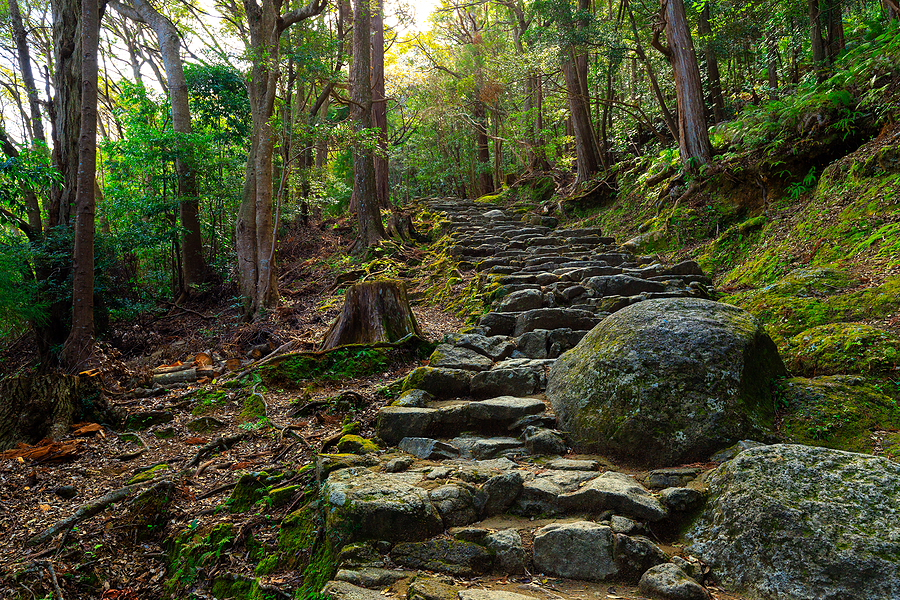
Japan is an island country in East Asia. Located in the Pacific Ocean, it lies off the eastern coast of the Asian continent and stretches from the Sea of Okhotsk in the north to the East China Sea and the Philippine Sea in the south.
Overview
Describing Tokyo to someone who has never been here is a formidable task. After all, how do you describe a city that--as one of my friends visiting Tokyo for the first time put it--seems like it's part of another planet? To be sure, Tokyo is very different from Western capitals, but what sets it apart is its people. Approximately 12 million people reside within Tokyo's 1,200,000,000 sq. km (800 sq. miles), and almost one-fourth of Japan's total population lives within commuting distance of the city. This translates into a crush of humanity that packs the subways, crowds the sidewalks, and fills the department stores beyond belief. In some parts of the city, the streets are as crowded at 3 am as they are at 3 pm. With its high-energy, visual overload, Tokyo makes even New York seem like a sleepy, laid-back town. And yet, despite its limited space for harmonious living, Tokyo remains one of the safest cities in the world, with remarkably little crime or violence. No matter how lost I may become, I know that people will go out of their way to help me. Hardworking, honest, and helpful to strangers, the Japanese are their country's greatest asset. With Tokyo so densely packed, it comes as no shock to learn that land here is more valuable than gold and that buildings are built practically on top of each other, shaped like pieces in a jigsaw puzzle to fit the existing plots of real estate. More than perhaps any other city in the world, Japan's capital is a concrete jungle, with a few parks but not many trees to break the monotony, and it stretches on and on as far as the eye can see. Fires, earthquakes, wars, the zeal for modernization, and the price of land have taken their toll on the city, eradicating almost all evidence of previous centuries. It's as though Tokyo was born only this morning, with all the messy aftermath of a city conceived without t plan and interested only in the future. Thus, first-time visitors to Tokyo are almost invariably disappointed. They come expecting an exotic Asian city, but instead find a megalopolis Westernized to the point of drabness. Used to the grand edifices and monuments of Western cities, they look in vain for Tokyo's monuments to its past--ancient temples, exquisite gardens, imperial palaces, or whatever else they've imagined. Instead, they find what may be, quite arguably, one of the ugliest cities in the world. So, while Tokyo is one of my favorite cities, it's an appreciation that came only with time. When I first moved here, I was tormented by the unsettling feeling that I was somehow missing out on the "real" Tokyo. Even though I was living and working here, Tokyo seemed beyond my grasp, elusive, vague, and undefined. I felt that the meaning of the city was out there somewhere if only I knew where to look. With time, I finally learned that I needn't look farther than my front window. Tokyo has no center but rather is made up of a series of small towns and neighborhoods clustered together, each with its history, flavor, and atmosphere. There are narrow residential streets, ma-and-pa shops, fruit stands, and stores. There's the neighborhood tofu factory, the lunch-box stand, the grocery shop, and the tiny police station, where the cops know the residents by name and patrol the area by bicycle. There are carefully pruned bonsai trees gracing sidewalks, women in kimonos bowing and shuffling down streets, and wooden homes on impossibly narrow streets. Walk in the old downtown neighborhoods of Asakusa or Yanaka and you're worlds apart from the trendy quarters of Harajuku or the high-rises of Shinjuku. Neighborhoods like these make Tokyo lovable and livable. What's more, once visitors get to know Tokyo better, they learn that you can't judge Tokyo by what it looks like on the outside, for this is a city of interiors. Even those concrete monsters may house interiors that are fascinating in design and innovation. In the basement of that drab building could well be a restaurant with wooden beams, mud walls, and thatched ceiling, imported intact from a farmhouse in the Japan Alps; on its roof could be a small Shinto shrine, while the top floor could house a high-tech bar or a sophisticated French restaurant. And beneath Tokyo's concrete shell is a thriving cultural life left very much intact. If,f you're interested in Japan's performing arts as well as such diverse activities as the tea ceremony or sumo, Tokyo is your best bet for offering the most at any one time. Tokyo is also rich in museums and claims the largest repository of Japanese art in the world. It also gets my vote as the pop-art capital of the world; if you're into kitsch, you'll be in high heaven. I can't imagine being bored here, even for just a minute.
Overview
As a center of river and sea transportation called the City of Water, Osaka has engaged in active exchanges not only with other parts of Japan but also with the Chinese Continent and the Korean Peninsula. Naniwazu.In the mid-7th century, an area in Osaka was designated the capital of Japan; the area prospered as Japan's oldest city. Even after the capital was moved first to Nara, and then to Kyoto, Osaka, as a key point in foreign trade, continued to play an important role in the development of Japan and the international exchange of culture. In the Middle Ages, Osaka developed as a temple town where Ishiyama Honganji Temple was located; during this period, Osaka served as a key point in the itinerary of pilgrims. In early modern times, the City grew into Japan's center of commerce and distribution. During this period, Osaka came to be characterized by enterprising and free-thinking merchants, and art and culture flourished in the City, where bunraku, kabuki, ki, and other traditional arts developed. As indicated above, Osaka is a city with precious historical and cultural heritage. As Osaka develops into an international tourist city, loved by people from around the world, it is hoped that many people will gather here for recreation, and become regular visitors to the City. Osaka welcomes tourists as a city with advanced technology, refined food culture, and shops with goods from around the world. Come visit Osaka for its many charms, and enjoy a holiday in the City that is just for you.
Overview

Busan/Pusan is Korea's second largest city. Tourists often come to this region to hike and to visit the Buddhist Temples located deep within the region's mountains. The Beomeosa Temple, founded in 678 AD, is perhaps one of the most frequented temples in the area and is always packed with worshipers and tourists. For art buffs, Busan offers several museums and historical buildings. If scenery is your thing, try visiting the Dongbaek Island, or bird watch at the Nakdong river estuary.
Overview

Seoul has been the capital of Korea for about 600 years, since the time of the Joseon Dynasty(1392-1910). Seoul was referred to as “Han Yang” during the Joseon Dynasty, but after the liberation from Japan, in 1945, the newly founded Republic of Korea officially changed its capital city’s name to Seoul. Seoul has developed into a bustling metropolis, acting as the hub for political, economic, social, and cultural matters. The Han River runs through the heart of the city. The river divides the city in two; the northern part of the city is a focal point for culture and history, while the southern part is well known for its business district. Seoul has hosted many international events including the 1986 Asian Games, 1the 988 Olympic Games, and the 2002 Korea/Japan FIFA World Cup. The success of these events has shown people that Korea is truly an international city. In Seoul, you can find ancient palaces and Royal Shrines of the Joseon Dynasty, as well as Seoul World Cup Stadium, 63 CITY building, Lotte World, Han River, Namsan, Bukhansan Mountain National Park, Daehangno, Insa-dong, Itaewon, Myeong-dong, Apgujeong, Namdaemun and Dongdaemun Markets. On the outskirts of Seoul, you can find Seoul Land, Everland, Caribbean Bay, The Korean Folk Village, Suwon Hwaseong Fortress, and Namhansan Mountain Fortress.
Overview
Seoul has been the capital of Korea for about 600 years, since the time of the Joseon Dynasty(1392-1910). Seoul was referred to as “Han Yang” during the Joseon Dynasty, but after the liberation from Japan, in 1945, the newly founded Republic of Korea officially changed its capital city’s name to Seoul. Seoul has developed into a bustling metropolis, acting as the hub for political, economic, social, and cultural matters. The Han River runs through the heart of the city. The river divides the city in two; the northern part of the city is a focal point for culture and history, while the southern part is well known for its business district. Seoul has hosted many international events including the 1986 Asian Games, 1the 988 Olympic Games, and the 2002 Korea/Japan FIFA World Cup. The success of these events has shown people that Korea is truly an international city. In Seoul, you can find ancient palaces and Royal Shrines of the Joseon Dynasty, as well as Seoul World Cup Stadium, 63 CITY building, Lotte World, Han River, Namsan, Bukhansan Mountain National Park, Daehangno, Insa-dong, Itaewon, Myeong-dong, Apgujeong, Namdaemun and Dongdaemun Markets. On the outskirts of Seoul, you can find Seoul Land, Everland, Caribbean Bay, The Korean Folk Village, Suwon Hwaseong Fortress, and Namhansan Mountain Fortress.
Overview

Shanghai, on China’s central coast, is the country's biggest city and a global financial hub. Its heart is the Bund, a famed waterfront promenade lined with colonial-era buildings. Across the Huangpu River rises the Pudong district’s futuristic skyline, including the 632m Shanghai Tower and the Oriental Pearl TV Tower, with distinctive pink spheres. Sprawling Yu Garden has traditional pavilions, towers, and ponds.
Overview
Shanghai, on China’s central coast, is the country's biggest city and a global financial hub. Its heart is the Bund, a famed waterfront promenade lined with colonial-era buildings. Across the Huangpu River rises the Pudong district’s futuristic skyline, including the 632m Shanghai Tower and the Oriental Pearl TV Tower, with distinctive pink spheres. Sprawling Yu Garden has traditional pavilions, towers, and ponds.
Overview

Miyakojima is a city district encompassing the Miyako Islands in Japan’s Okinawa Prefecture. Miyako-jima Island is known for its beach resorts and coral reefs. In its southwest is Yonaha-Bahama beach, with its warm, deep waters and abundant sea life. To the north, Sunayama bBeachhas arched rock formations and a coral reef. In the south, the themed Ueno German Culture Village has a replica castle and amusement rides.
Overview

Hualien County is a county on the east coast of Taiwan. It is the largest county by area, yet due to its mountainous terrain, has one of the lowest populations in the country. The county seat and largest city is Hualien City.Most of the population resides in the Huadong Valley, which runs north to south, sandwiched between the Central and Hai'an mountain ranges. Due to the rural nature of the county, Hualien attracts many visitors for its natural beauty, which includes Taroko Gorge, Qingshui Cliff, and Qixingtan Beach.
Overview

Keelung, officially known as Keelung City, is a major port city situated in the northeastern part of Taiwan. It borders New Taipei with which it forms the Taipei–Keelung metropolitan area, along with Taipei itself. Nicknamed the Rainy Port for its frequent rain and maritime role, the city is Taiwan's second-largest seaport. Keelung City is located in the northern part of Taiwan Island. It occupies an area of 132.76 km2 and is separated from its neighboring county by mountains in the east, west, and south. The northern part of the city faces the ocean and has been a great deep-water harbor since early times. Keelung has a humid subtropical climate with a yearly rainfall average of upwards of 3,700 millimeters. It has long been noted as one of the wettest and gloomiest cities in the world; the effect is related to the Kuroshio Current. Although it is one of the coolest cities in Taiwan, winters are still short and warm, whilst summers are long, relatively dry, and hot, temperatures can peek above 26°C during a warm winter day, while it can dip below 27 °C during a rainy summer day, much like the rest of northern Taiwan. However, its location on northern mountain slopes means that due to orographic lift, rainfall is heavier during fall and winter, the latter during which a northeasterly flow prevails. During summer, southwesterly winds dominate and thus there is a slight rain shadow effect. Fog is most serious during winter and spring when relative humidity levels are also highest.
Overview

Hong Kong is a place of contrasts. Sleek, glassy skyscrapers shine above Old World markets where chicken feet and dried squid are displayed for sale. Archaic wooden boats bob past sleek cruise liners. Subway stations and expressway interchanges dot a landscape cluttered with Rolls Royce and rickshaws. Hong Kong Island was ceded to Britain in 1842 when those serving the British crown attacked the island. Though it was deeded back to China in 1997, Hong Kong enjoys a high degree of autonomy, especially in its economy and municipal government. Hong Kong is one of the most unique Chinese cities in the world. The 417-square-mile island off the coast of China offers visitors a slice of authentic Chinese culture with all the amenities of home. A modern metropolis teeming with Eastern and Western influences, Hong Kong is the world's third-largest financial center, the so-called “Wall Street of Asia,” and a shopping gold mine. Shopping? Yes indeed. Hong Kong is a duty-free port and the world's leading exporter of toys, garments, watches, and electronics. As a result, the vast majority of the 10 million annual visitors come with an empty suitcase that they fill up after visiting the malls, street bazaars (Stanley Market is world famous), textile and tailor shops, and jade and electronic stores. Those willing to look beyond the bargain-basement prices will find that Hong Kong is more than the world’s largest department store – it’s a cultural Mecca with wining and dining, museums, and historic attractions. Be sure to ride the world-famous Star Ferry across the harbor to Hong Kong Island, admire the mansions on Repulse Bay, drop in to see the temples on Cat Street, visit the fishing boats and villages in Aberdeen, and take a tram ride up to Victoria Peak (the island’s highest peak sitting 1,308-feet above the city) for a stunning panoramic view. If you have time to go further, travel to Macau, a former Portuguese colony with a casino, and the New Territories of China, a Hong Kong bedroom community that “sleeps” near China’s border.
Onboard the Seabourn Encore
Seabourn Encore
Costco Member Reviews

Year Built: 2016
Double Occupancy Capacity: 600
Seabourn Encore is as strikingly beautiful and as excitingly innovative as any Seabourn has ever debuted. She crowns a fleet of luxury cruise ships that is already the newest, most modern and most acclaimed in the ultra-luxury segment. Modeled on the award-winning trio of ships that came before her, Seabourn Encore represents another welcome stage in the evolution of small ship cruising, which Seabourn pioneered and has consistently expanded and enriched for all of our small ship cruises.
Onboard Activities
Activities & Services (included in cruise)
|
No Image Available |
- Business Center
- Card Room
- Casino
- Concierge Desk
- Conference Center
- Disco/Nightclub
- Dry Cleaning/Laundry Service
- Duty-Free Shops/Boutiques
- Educational Programs
- Elevators
- Fitness Center
- Fitness Classes
- Guest Lecturers
- Infirmary/Medical Center
- Movies Under the Stars
- Movies Under the Stars®
- Pool - Indoor/Covered
- Pool - Outdoor
- Religious Services
- Safe Deposit Boxes
- Sauna/Steam Room
- Self-Service Laundromat
- Theaters/Show Lounge
- Water Sports Platform
- Wedding/Vow Renewal
- Whirlpool/Jacuzzi
Activities & Services (available for an extra fee)
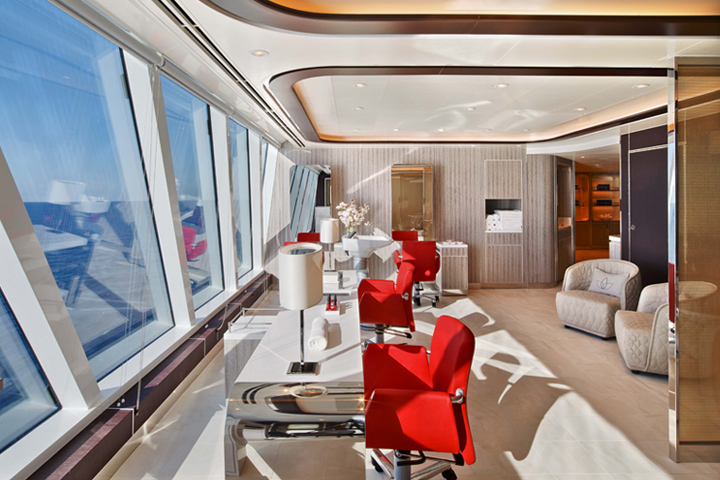
Beauty Salon
- Beauty Salon
- Full-Service Spa
- Spa Services/Massage
Dining
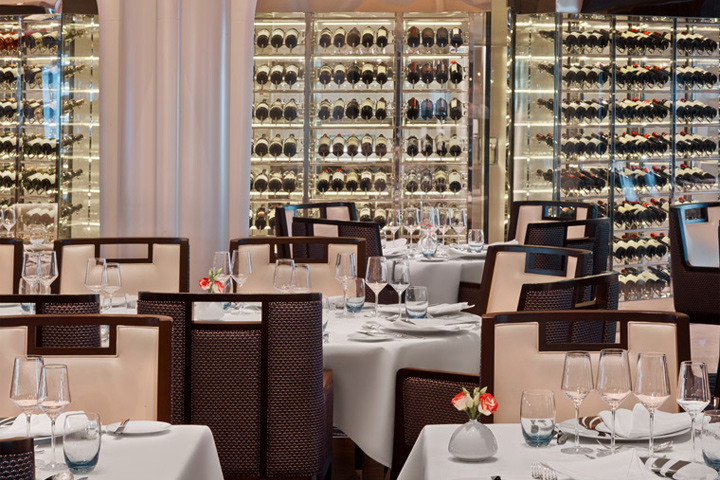
The Restaurant
Main Dining
The Restaurant: Come when you like, with whom you please, and be seated as you wish. The room is beautiful, the cuisine is exquisite, and the service is simultaneously flawless, friendly and fun.
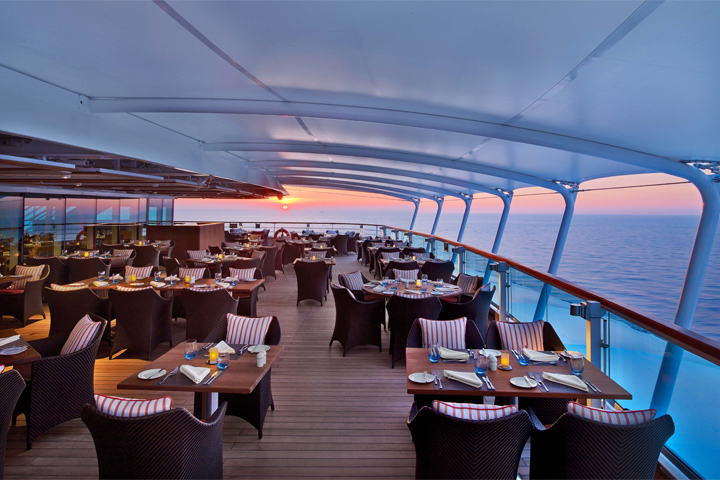
The Colonnade
Casual Dining
Coffee Bar: Enjoy a specialty crafted espresso just the way you like it.
Earth & Ocean: Each evening, the skilled chefs create an imaginative array of fresh, inventive dishes—a sophisticated menu celebrating eclectic traditional flavors from around the world, served in a relaxed setting under the stars for a distinctive dining experience unlike any other on board.
Observation Bar: A stunning round lounge with a square bar and panoramic views. Early Risers’ Coffee and Tea is served here every morning, and piano music makes it a great choice for drinks and conversation before and after dinner.
Seabourn Square: Whether you're looking for a place to enjoy your newspaper in the morning or want to socialize with your fellow passengers, Seabourn Square is what you're looking for. This inviting lounge offers plush seating, cocktail tables, a library, computer terminals, a coffee bar, and Guest Services staff.
Solis: Offering light, modern Mediterranean cuisine bursting with color and character, prepared fresh and entirely from scratch.
The Club: Open for afternoon tea then transforms into a dance club in the evening. Socialize while enjoying cocktails, live music, and great company.
The Colonnade: The more casual, indoor/outdoor alternative features an open kitchen, lavish buffets or table service for breakfasts and lunch, and serves regionally themed, bistro-style dinners with table service nightly.
The Patio: Relaxed poolside dining offering luncheon buffets, salads, soups, grilled specialties and freshly baked pizza. Dinners feature a full menu in an alfresco setting.
Sky Bar: A place to enjoy a refreshing tropical beverage during the day, or an evening cocktail under the stars.
Sushi: Seabourn researched ingredients and developed a menu that is an ideal blend of authenticity to maintain the root of the cuisine and a twist of Seabourn’s culinary expertise. The sushi concept is a modern line that is steeped in tradition and uses some of the finest ingredients. Hamachi, tuna, shrimp and other fresh fish products will be shipped from Japan to Sushi and served à la carte for dinner. The menu features caviar and small plates, along with a selection of maki rolls, sushi and sashimi, and salads.
In-Suite Dining: A varied menu available around the clock for service in your suite. You may also order dinner from The Restaurant menu and have your meal served, course by course, in your suite or on your veranda.
Staterooms
All Veranda Suites feature a full-length window and glass door to private veranda, comfortable living area, queen-size bed or two twin beds, dining table for two, walk-in closet, interactive flat-screen television with music and movies, fully stocked bar and refrigerator, makeup vanity, spacious bathroom with separate tub and shower.
- Guarantee - Balcony (Category: OB)

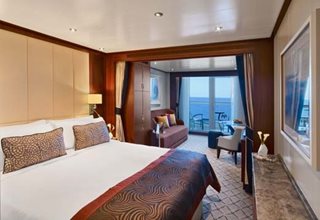
Category: OB
This category can be booked for a special rate, guaranteed to you. Please note that the category is not associated at the time of booking with a specific stateroom, deck, bedding configuration or other particular settings. The assignment of an actual cabin will be performed during your check-in. The cabin can be anywhere on the ship.
- Guarantee - Suite (Category: SV)
Category: SV
This category can be booked for a special rate, guaranteed to you. Please note that the category is not associated at the time of booking with a specific stateroom, deck, bedding configuration or other particular settings. The assignment of an actual cabin will be performed during your check-in. The cabin can be anywhere on the ship.
- Veranda Suite (Category: V3)
Category: V3
All Veranda Suites feature a full-length window and glass door to private veranda, comfortable living area, queen-size bed or two twin beds, dining table for two, walk-in closet, interactive flat-screen television with music and movies, fully stocked bar and refrigerator, makeup vanity, spacious bathroom with separate tub and shower.
- Veranda Suite (Category: V2)
Category: V2
All Veranda Suites feature a full-length window and glass door to private veranda, comfortable living area, queen-size bed or two twin beds, dining table for two, walk-in closet, interactive flat-screen television with music and movies, fully stocked bar and refrigerator, makeup vanity, spacious bathroom with separate tub and shower.
- Veranda Suite (Category: V1)
Category: V1
All Veranda Suites feature a full-length window and glass door to private veranda, comfortable living area, queen-size bed or two twin beds, dining table for two, walk-in closet, interactive flat-screen television with music and movies, fully stocked bar and refrigerator, makeup vanity, spacious bathroom with separate tub and shower.
- Veranda Suite (Category: V4)
Category: V4
All Veranda Suites feature a full-length window and glass door to private veranda, comfortable living area, queen-size bed or two twin beds, dining table for two, walk-in closet, interactive flat-screen television with music and movies, fully stocked bar and refrigerator, makeup vanity, spacious bathroom with separate tub and shower.
All Penthouse Suites on board feature a comfortable living area, glass door to private veranda, queen-size bed or two twin beds; walk-in closet with personal safe, two flat-screen TV with music and movies, fully stocked bar and refrigerator, writing desk with personalized stationary, makeup vanity, spacious bathroom with separate tub and shower, plush robes, slippers hair dryer and 110/220V AC outlets.
- Owner's Suite (Category: O2)
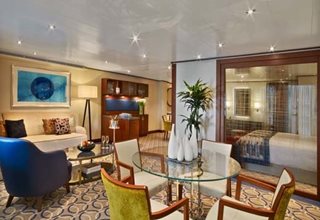
Category: O2
Suites on board feature a comfortable living area, private veranda, queen-size-bed or two twin beds; walk-in closet with personal safe, interactive flat-screen TV with music and movies, fully stocked bar and refrigerator, writing desk with personalized stationary, makeup vanity, spacious bathroom with separate tub and shower, plush robes, slippers, hair dryer, and 110/220V AC outlets.
- Penthouse Spa Suite (Category: PS)
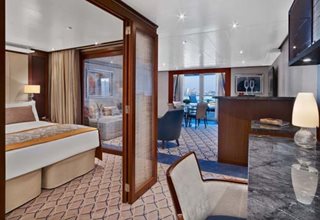
Category: PS
All Penthouse Suites on board feature a comfortable living area, glass door to private veranda, queen-size-bed or two twin beds; walk-in closet with personal safe, two flat-screen TV with music and movies, fully stocked bar and refrigerator, writing desk with personalized stationary, makeup vanity, spacious bathroom with separate tub and shower, plush robes, slippers, hair dryer, and 110/220V AC outlets.
- Owner's Suite (Category: O1)
Category: O1
Suites on board feature a comfortable living area, private veranda, queen-size-bed or two twin beds; walk-in closet with personal safe, interactive flat-screen TV with music and movies, fully stocked bar and refrigerator, writing desk with personalized stationary, makeup vanity, spacious bathroom with separate tub and shower, plush robes, slippers, hair dryer, and 110/220V AC outlets.
- Penthouse Suite (Category: PH)
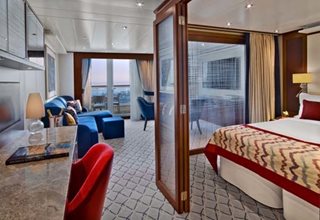
Category: PH
All Penthouse Suites on board feature a comfortable living area, glass door to private veranda, queen-size-bed or two twin beds; walk-in closet with personal safe, two flat-screen TV with music and movies, fully stocked bar and refrigerator, writing desk with personalized stationary, makeup vanity, spacious bathroom with separate tub and shower, plush robes, slippers, hair dryer, and 110/220V AC outlets.
- Penthouse Guarantee (Category: PG)
Category: PG
This category can be booked for a special rate, guaranteed to you. Please note that the category is not associated at the time of booking with a specific stateroom, deck, bedding configuration or other particular settings. The assignment of an actual cabin will be performed during your check-in. The cabin can be anywhere on the ship.
- Grand Suite (Category: GR)
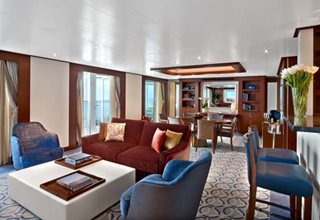
Category: GR
Suites on board feature a comfortable living area, private veranda, queen-size-bed or two twin beds; walk-in closet with personal safe, interactive flat-screen TV with music and movies, fully stocked bar and refrigerator, writing desk with personalized stationary, makeup vanity, spacious bathroom with separate tub and shower, plush robes, slippers, hair dryer, and 110/220V AC outlets.
- Signature Suite (Category: SS)
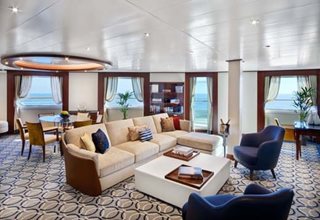
Category: SS
Suites on board feature a comfortable living area, private veranda, queen-size-bed or two twin beds; walk-in closet with personal safe, interactive flat-screen TV with music and movies, fully stocked bar and refrigerator, writing desk with personalized stationary, makeup vanity, spacious bathroom with separate tub and shower, plush robes, slippers, hair dryer, and 110/220V AC outlets.
- Wintergarden Suite (Category: WG)
Category: WG
Suites on board feature a comfortable living area, private veranda, queen-size-bed or two twin beds; walk-in closet with personal safe, interactive flat-screen TV with music and movies, fully stocked bar and refrigerator, writing desk with personalized stationary, makeup vanity, spacious bathroom with separate tub and shower, plush robes, slippers, hair dryer, and 110/220V AC outlets.
Deck Plan

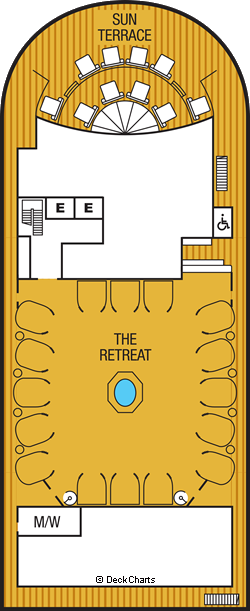
| Symbol | Description |
|---|---|
 | Veranda railings are part metal and part glass; the forward half of the railing is metal and aft half is glass with teak rail |
 | Obstructed port side view with larger veranda overlooking the center pool |
 | Subject to noise when anchoring; has all-metal veranda railings, limiting the view |
 | Shower only |
 | The veranda railings on Deck 5 are part metal and part glass from floor to teak rail; suites on Deck 5 have slightly larger verandas |
 | Third guest capacity suite |
 | Wheelchair accessible suite, roll-in shower only, wheelchair-accessible doorways |
 | Elevator |
Ship Facts
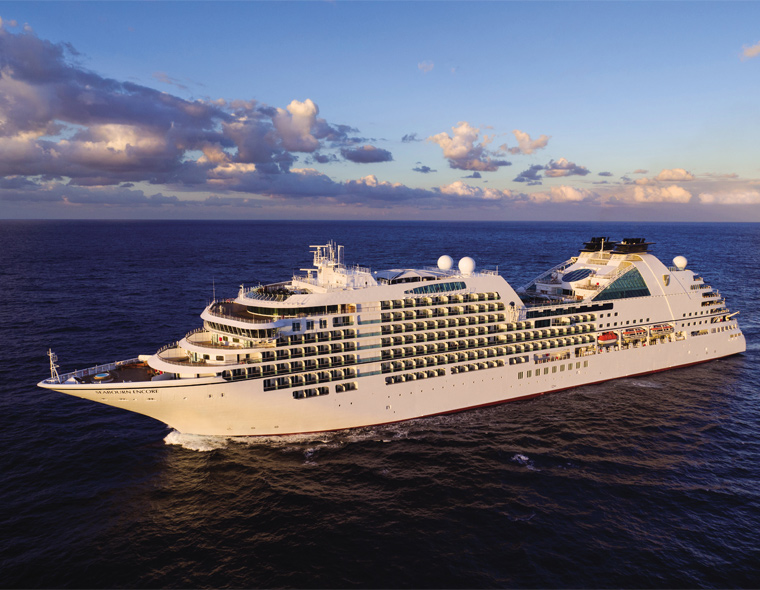
- Ship Name: Seabourn Encore
- Ship Name: Seabourn Encore
- Year Built: 2016
- Year Entered Present Fleet: 2016
- Ship Class: E
- Maximum Capacity: 600
- Number of Passenger Decks: 10
- Number of Crew: 395
- Officers' Nationality: International
- Ocean-View with Balcony: 262
- Tonnage (GRT): 43,000
- Capacity Based on Double Occupancy: 600
- Country of Registry: The Bahamas
- Total Staterooms: 300
- Suites with Balcony: 38
- Crew/Hotel Staff Nationality: International
Costco Member Reviews
Available Dates and Prices
Terms & Conditions
*Price shown is per person based on double occupancy, is valid for select stateroom categories only and does include government taxes/fees and gratuities. Click on the Terms & Conditions link below for details.
**Select complimentary shore excursions are for full-fare guests only, capacity controlled and subject to availability. Shore excursion reservations are accepted on a first-come, first-served basis. Please note, available excursions vary by sailing date and day of the week. Government fees and taxes are included. Requested excursions may not be available at time of booking. Supplement will apply on Ventures by Seabourn®, optional shore excursions. Restrictions apply and penalties apply 36 hours prior to shore excursion start date.
†One Digital Costco Shop Card per room/stateroom, per stay. The exact amount of the Digital Costco Shop Card will be calculated during the booking process. The Digital Costco Shop Card promotion is nontransferable and may not be combined with any other promotion. A Digital Costco Shop Card will arrive by email approximately 10 days after the start of your cruise. Click on the Terms & Conditions link below for additional information.
Ship's registry: The Bahamas
Package ID: SBNENCASI20271106
Digital Costco Shop Card
Book this cruise with Costco Travel and receive a Digital Costco Shop Card. The Digital Costco Shop Card is a convenient payment option in our warehouses and on Costco.ca.



 You have unsaved preference changes.